
For me, loving friendship is not a fusion with another, but it is a rickety swing bridge to a separate being, and even though I know it can fall into the abyss, the urge to step on to it is always there. There is strength in that desire for connection, the possibility of being saved from invisibility.
Patti Miller
Two sets of friends-who-have-become-family, including my ladybug, have moved states away.
Their journeys back to quietude and deep roots and wide spaces and parents and grandparents and cousins and other friends-who-are-family is God’s lovingkindness. I’d champion these moves again in a heartbeat. I prayed for them because it was for my people’s best.
And for my part, I prepared for sorrow: that my lovelies would go ahead in life without me, that I’d lose their physical presence.
But surprisingly, that sorrow wasn’t the most difficult emotion. Rather, it was submitting with grace and courage to the importance of staying in relationship with them — when the easier path would have been to wish them well and cut ties.
To some readers, that might sound like pouting, envy, or selfishness. But those of us who feel the fragility of life more intensely, who invest deeply (though often cautiously) in the lives of those we love, also know the temptation to guard ourselves against hurt.
Others don’t always understand the pain we risk by extending a hand of friendship in the first place. The wisdom and energy required to let ourselves be known deeply. To choose whether to give someone access to our stories and dreams and joys and hurts, knowing they could use everything against us — or reject us altogether.
Sensitive souls are familiar with the complex intersection of grief and joy. And if becoming “good friends” takes 200 hours, how much truer, deeper, and more abiding are my ties to these two families after the years we’d invested in each other? How much harder to let go?
But love asks us to stay in the story, to keep showing up. (1 Corinthians 13:13).
Love means we understand that parting is inherent to every relationship, whether through relocation or death or a changed season, wanted or unwanted. Love means we embrace the value of wisely knowing and safely being known. We relinquish ourselves to today’s joys and sharpening irons while braving the truth of eventual goodbyes.
You don’t have to bury the fragile, beautiful, vulnerable things out of fear, out of striving for some kind of self-protection, out of hardened, dysfunctional denial, but you can live with and live fully embracing all of life’s beauty and fragility, and you can celebrate all that is breakable, and each and every day, you can savor the fleeting, amazing grace of all that is amazingly fragile, and you don’t have to take anything for granted, nor take and bury anything to protect yourself from pain.
Ann Voskamp

In the 1950s, early in my maternal grandparents’ marriage, they spent a few seasons as custom combiners. While traveling the harvest routes, they stayed in different places and met new people. My grandmother was a natural engager, so I doubt that bothered her too much. But the lifestyle was still stressful, and one night she was flat out of ideas for supper.
Mrs. Gunn, the other woman in the duplex they temporarily shared, gave her a recipe for juicy hamburgers. I wonder what the women were talking about when the subject came up. I can hear Grandmother’s fatigue (but humor, too!): What on earth to make now? And I imagine Mrs. Gunn saying, Try this!
Juicy Hamburgers
- Brown 1 lb. hamburger with 1 small, chopped onion and scant salt and pepper.
- Add:
- 2 Tbsp. ketchup
- 2 Tbsp. mustard
- 1 can chicken gumbo soup
- Simmer until hot.
- Serve on hamburger buns with lettuce and a cheese slice.
I wonder if Mrs. Gunn felt shy or embarrassed to offer something so simple. Then again, why would she? After the Depression and both World Wars, people weren’t strangers to scarcity and life’s tenuousness and the need for interdependence.
Sadly, we’ve become a culture of independence (or so we think) that doesn’t lend well to village life that flourishes only through giving and receiving and being inconvenienced. And that’s why it’s even more important that I fight to stay in the story with the beloved friends God has so graciously given.
We will continue to invest in each other so we can strengthen and be strengthened. We say to our Lord, Thank you for this gift of this soul in my life for this time. And then we open our hearts to that person and open our hands to God’s good timetable. Even when it feels sad or awkward or hard. Because it’s never about us in the first place.
Who you are becoming today influences the ‘becoming’ of those closest to you right now. And their ‘becoming’ influences the ‘becoming’ of real souls in the next generation and in untold generations after that. It’s a ripple effect that spans across generations — ‘That a people not yet created may praise the Lord.’ [Psalm 102:1-22]
Jennifer Dukes Lee

Lord willing, there will be many travels to and with these friends — to share stories and laughter and tears, to have grand adventures and contented evenings around the supper table, to make new memories in new places.
And hopefully, leaning into those experiences of continued knowing and being known will make us more humbly aware that, in these cases of God-given heart connections, reward outweighs risk.
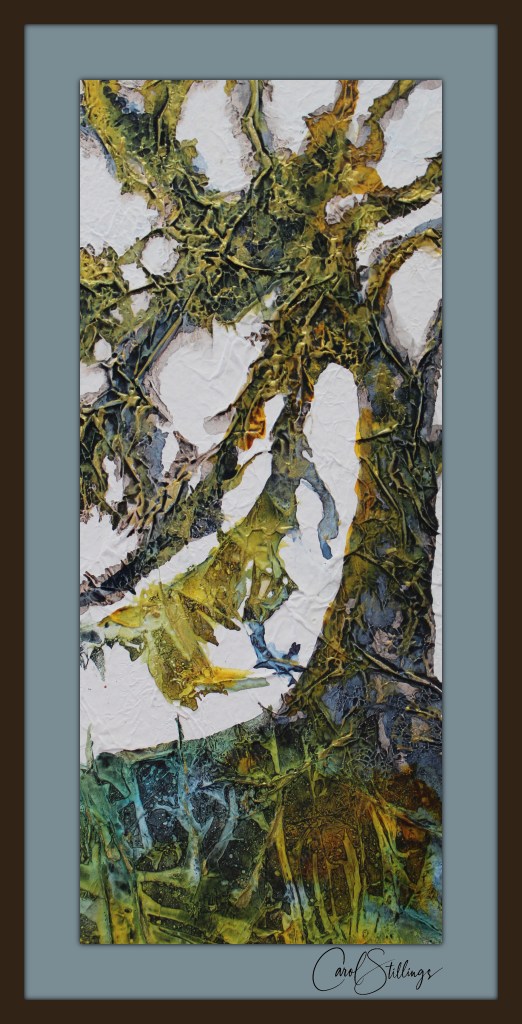
The central core of a tree is called heartwood. It’s dead and no longer carries water or nutrients, but neither does it rot or become weak, as long as the tree’s outer layers live.
Author Barbara Becker suggests that “in the perfect ecology of a tree, the dead become the heart of the living, and the living nourish the enduring essence of the dead.” She continues:
So it is with our lives, where life and death cannot exist separately from each other. Heartwood is about strength in what remains and the virtue of listening to our innermost source of stability and stillness. It is about how trusting the natural cycle of life and loss can help us to better live our lives. It applies equally in ordinary times as it does during the most trying of times, when the surety of our existence is called into question. …
Slowly, as we give ourselves permission to relax the vise grip we use to try to control our circumstances, a sense of freedom emerges from within. Though little may have changed on the outside, and loss will continue to be our companion, our internal landscape is renewed. Just as we will cherish ourselves more, we will cherish others more as well.
 Carol Stillings